
Lighting is essential in our everyday lives. It helps us stay focused, enhances our cognitive performance, and affects our well-being.
When we buy a lamp, we give priority to the quality and its energy efficiency, while in most cases, color temperature goes unnoticed.
In addition to the lumens, shape, voltage, and watts of a lamp, it is also important to consider the color temperature for each room in your home. Color temperature is measured in Kelvin (K) and refers to the color emitted by a light source.
It affects the mood and aesthetics of your space, as well as your health. For example, soft light promotes a relaxing atmosphere, while bright light keeps you sharp.
Below you will find all relevant information on different color temperatures in order to choose the right bulbs for every room.
Color Temperature
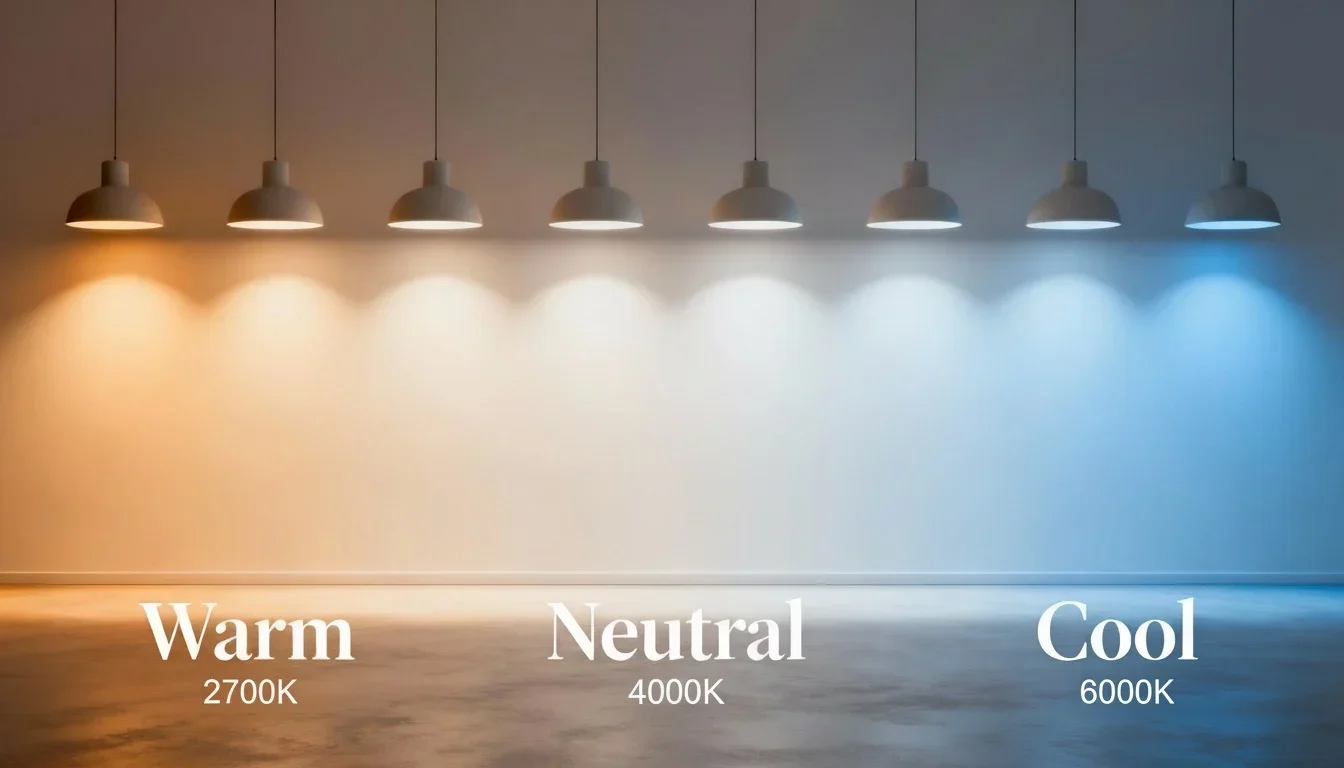
Color temperature indicates the hue of light. A low Kelvin value, such as 2,700K, refers to a warm light with a yellowish-white hue and is comparable to the light emitted by a traditional bulb.
A high Kelvin value, such as 6,500K, refers to a cool light with a blue-white hue and resembles daylight.
This measurement is used to describe the color characteristics of light sources, from coolness to warmth. Color temperature affects both the atmosphere of the room and our mood. Warm white light creates a warm and relaxing atmosphere, while daylight white light has a stimulating effect and promotes concentration.
The Kelvin scale
The Kelvin scale is widely used in science. Named after the British physicist Lord Kelvin, it is the base unit of thermodynamic temperature in the International System (SI). In simple terms, it is an important tool for describing and classifying the colors of light.
Color temperature is based on the idea of a "black body" that, when heated, emits light in different shades. The higher the temperature of the black body, the colder and bluer the light appears. It shows us how light energy moves through a spectrum of colors.
The Kelvin scale allows us to compare the color temperature of different light sources and select the appropriate light color depending on the application.
Are color temperature and light temperature the same?
The terms color temperature and light temperature are often used for the same reason, as they describe the same physical property: the coloration of light, which is measured in Kelvin (K) and ranges from warm tones (low Kelvin values) to cool tones resembling daylight (high Kelvin values). However, the term color temperature is more precise and common, especially in lighting technology and photography.
What is the difference between Kelvin and Lumen?

Kelvin (K) and Lumens (LM) are two different units of measurement that give us values for two different properties of light.
Kelvin (K) refers to the color temperature of light and indicates how "warm" or "cool" the light is. Lumen (lm), on the other hand, gives us the brightness value. The higher the lumen value, the brighter the light.
Simply put, Kelvin describes the color of light, while lumens indicate how brightly that color shines. You can also read our guide on lumens for more detail.
The colors of light and their effect
The color temperature of light has a significant impact on our mood and the atmosphere of a room. It is therefore important to understand the different color temperatures and their effects to design lighting in a way that meets our needs.
The Kelvin scale ranges from 1,000-10,000K. Below you will see the Kelvins we use for lighting, their properties, and application examples.
| Color Temperature | Kelvin | Properties | Application |
| Warm white | 2,000-3,000K | Warm, relaxing, reminiscent of candlelight, ideal for atmospheric lighting | Place it in the living room, bedroom or children's room. |
| Neutral White | 3,100-4,500K | Natural, balanced, neutral, without strong yellow or blue tint | Bathroom, kitchen, dining room, activity room, office |
| Cool white/daylight | 4,600-6,500K | Particularly bright, resembles natural light, promotes concentration | Workspace, home office, gym, staircase |
Warm white light has a similar color to the light from a traditional lamp. The high proportion of red light in warm white light helps create a relaxing atmosphere and makes the living room and bedroom particularly comfortable. Warm white light is associated with warmth and homeliness. It can also enhance the appearance of wooden furniture, making it suitable for spaces with wooden furniture. In the hospitality industry, warm white light is often used to create a relaxed atmosphere in dining rooms or waiting areas.
Neutral white light has a balanced ratio of red and blue tones. In contrast to the yellowish light of warm white, neutral white looks brighter and more professional. It creates a pleasant atmosphere, without being particularly stimulating. It is suitable for spaces where balanced lighting is needed, both relaxing and stimulating. Apply neutral white to the hallway, kitchen and bathroom. In the kitchen it provides illumination of surfaces, while in the bathroom it provides clear lighting for care and personal hygiene. It is also a good choice for work spaces where concentration and attention are required, as it provides a professional and focused atmosphere.
Cool white/daylight has a high blue content and resembles natural light on a cloudy day. It has a clear effect and creates a refreshing atmosphere. It promotes concentration and focus and is therefore suitable for work environments and libraries. White daylight increases efficiency and helps you feel alert. Apply it in rooms used for creative activities or tasks that require concentration. It can also be used in indoor sunny spaces and provide uniform lighting.
Does color temperature affect biorhythm?
The color temperature of light has a direct impact on our circadian rhythm, especially our sleep-wake cycle. This is because color temperature affects the hormone melatonin, which plays an important role in regulating our sleep. Warm light with a low color temperature promotes melatonin production and signals to our body that it is time to relax and prepare for the night. Cold light with a high color temperature inhibits melatonin production and signals to our body that it is time to wake up and be active. Using cold light in the morning helps us wake up faster.
It is therefore recommended to adjust the color temperature of the light to the time of day to follow the natural biorhythm. During the day, when we need to be active and focused, cool white light is a good choice. At night, when we want to relax and prepare for sleep, warm white light is more suitable.
How do I find the color temperature indication for the lamp I want to buy?
There are different shades of light on the market, from warm white to cool white. Usually, the information is found on the product packaging.
It is given in degrees Kelvin (K) and indicates whether the light emitted is warm or cool. In addition to the numerical Kelvin rating, you may also see descriptions such as "warm white", "neutral white", or "daylight white".
Can I change the color temperature?
In some lamps, changing the color temperature is possible and usually works by dimming the light. A prerequisite is, of course, the appropriate lamp and a dimmer. However, not all LED lamps are dimmable. Therefore, pay attention to the product description.
Why is color temperature important?
Color temperature has a significant impact on the feel and appearance of a space. Therefore, choosing the right color temperature is important for creating a specific atmosphere. For example, you may want to create a warm atmosphere in your bedroom, as opposed to your workspace, which is more suited to a cooler color temperature that enhances focus.
What is CRI (Color Rendering Index)?
The Color Rendering Index or CRI value determines the accuracy and naturalness of the colors of a light source. The higher the CRI value, the better the rendering, with colors appearing more natural. A high CRI value contributes to better perception of colors and details.

Modern light sources, such as LEDs, can even reach values of up to 100CRI, which corresponds to perfect color rendering. On the market, you will also find values from 70CRI to 98CRI. Good color rendering is important, for example, when applying makeup, choosing clothes, or observing works of art.
Accurate color reproduction is also essential in professional industries such as the printing industry, graphic design and photography. Therefore, choose lamps with a high color rendering index to ensure the most natural color reproduction.
Color Temperature for Every Space
Living Room
We usually spend a lot of time in the living room and use the space for various activities such as relaxing, reading, watching TV, playing games or socializing. Therefore, the right lighting in the living room is particularly important. Color temperature plays a crucial role in creating the desired atmosphere and affects our well-being.
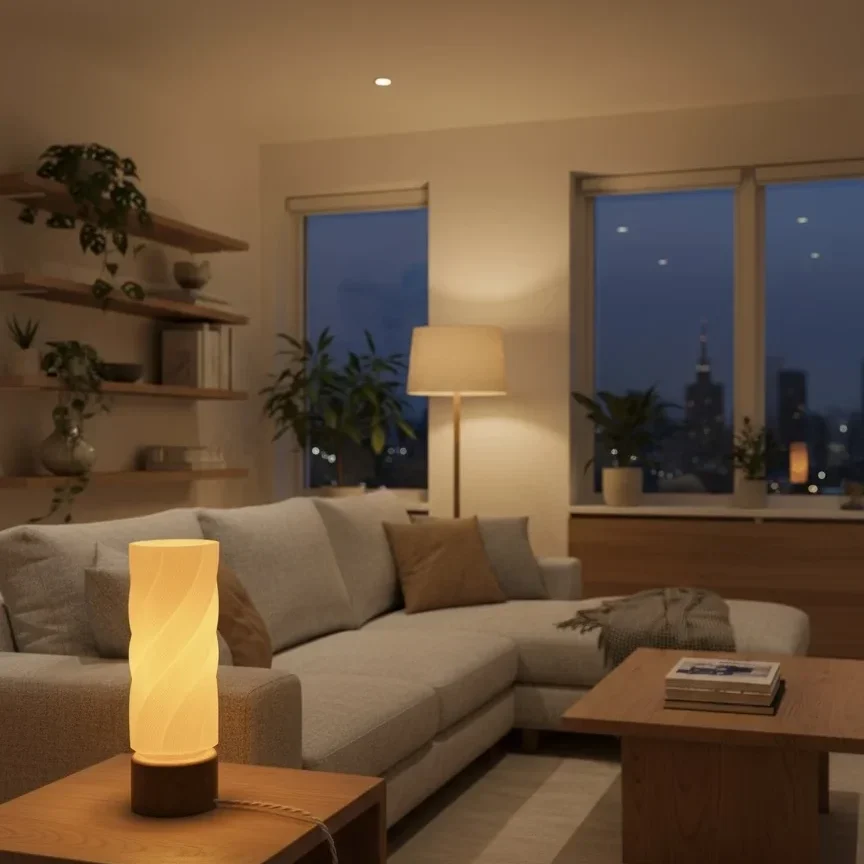
Warm white light is ideal for creating a warm and relaxed atmosphere in the living room. It is suitable in the evening hours, when you want to end the day comfortably. A bedside-style lamp on a side table — like the Himiko shown above — works well as a layered, low source of warm light. Neutral white light has a softer effect and is ideal for areas in the living room where you are more active, e.g. when reading or playing. To achieve optimal lighting in your living room, it is recommended to combine different light sources with different color temperatures. This way, you can create light for every occasion and mood. Here are some tips for lighting in your living room:
- As main lighting, use warm white light to create a warm atmosphere.
- Use lights with neutral white light to target specific areas, such as the reading corner.
- Use dimmable lights to adjust the intensity and mood of the light depending on the occasion.
- Make sure the lighting in the living room is evenly distributed to avoid shadows.
- For corners and reading nooks, a floor lamp like the Aeno casts a steady, ambient glow.
With the right combination of different light sources and color temperatures, you can transform your living room into a space of relaxation and well-being.
Bedroom
In the bedroom, relaxation is at the forefront. The right lighting contributes significantly to sleeping well at night and waking up refreshed in the morning.

Warm white light is the ideal choice for the bedroom as it prepares the body for sleep. Warm light is similar to the light of a sunset and promotes the production of melatonin. A small bedside lamp like the Himiko or Naora with a warm-white bulb fits this use case naturally. Neutral white light is less recommended in the bedroom as it has a more stimulating effect. However, you can use it if you want to read.
White daylight should be avoided in the bedroom as it has an activating effect, disrupts the natural sleep-wake rhythm and can lead to sleep problems.
Bedroom lighting tips:
- Use warm white light. Overhead and wall fixtures with warm white LED bulbs create a pleasant atmosphere.
- Place warm or neutral white reading lamps on both sides of the bed. This way, you can read before bed without disturbing your partner.
- Choose dimmable lights to adjust the intensity depending on the situation. This allows you to gradually reduce the lighting.
- A night light with low brightness and warm white light can help you orient yourself in the bedroom at night without disturbing your sleep.
Kitchen & Dining area
In the kitchen and dining area, the right color temperature contributes to the functionality of the space.

Neutral white light is the ideal choice for basic lighting. It is similar to daylight and allows for good visibility of colors and details, which is especially important during the cooking process. Warm white light works as accent lighting in the kitchen. It creates a warm atmosphere and can be used above the table to create a relaxed atmosphere at meals. Daylight white light can also be used carefully to illuminate certain areas such as the worktop.
Lighting tips for the kitchen and dining room:
- For basic lighting, use neutral white light. Overhead fixtures ensure uniform lighting in your space.
- Equip kitchen surfaces with under-cabinet lamps or LED strips to ensure optimal light for technical tasks.
- For a warm atmosphere in the dining room, use warm white light. Choose fixtures that adjust the intensity of the light.
- Feel free to combine different color temperatures depending on the activity and the mood you want to create.
Office
The right color temperature helps us stay focused and efficient.
The ideal choice of basic lighting for the office is white daylight, as it supports the production of the hormone cortisol, which makes us efficient. Of course, we can enrich the space with additional lighting. If you find white daylight too bright, neutral white is a good alternative. It provides enough brightness and ensures the right lighting in the workspace, while making it less tiring on our eyes. Warm white light is not preferred for workspaces, as it can cause relaxation and therefore have the opposite effect than desired.
For desk-level lighting, a small surface lamp adds a focused, glare-free source next to your screen — the Noka and Kinami both suit a workspace setting.
Tips for office lighting:
- Make sure there is sufficient brightness to protect your eyes.
- Make sure there are no shadows and that the space is well-lit.
- To avoid reflections on screens, use anti-glare lights.
- Experiment with different color temperatures to find one that helps you stay focused.
The right light temperature for every need
Color temperature greatly influences the aesthetics and appearance of a space and helps create a specific atmosphere. Warm light creates a welcoming environment. For example, you may wish to have a warm atmosphere in your bedroom, while your workspace benefits from a cooler color temperature that promotes focus. By combining different colors and types of light within a space, you can create a flexible and stimulating lighting scheme that fulfils both functional and aesthetic needs.
At Monoprisma, you will find a range of lamps with various color temperatures. Many are dimmable and let you adjust the light to suit the moment.
Looking for lighting that feels easy to live with?